A sticking door is a symptom, not a complete diagnosis. The cause may involve hardware, paint buildup, movement in the door or frame, changing humidity, floor contact, or conditions around the opening. Useful observations help a handyman see the pattern without encouraging anyone to force the door, alter hinges, or remove material before the assembly has been evaluated.
Locate the Contact
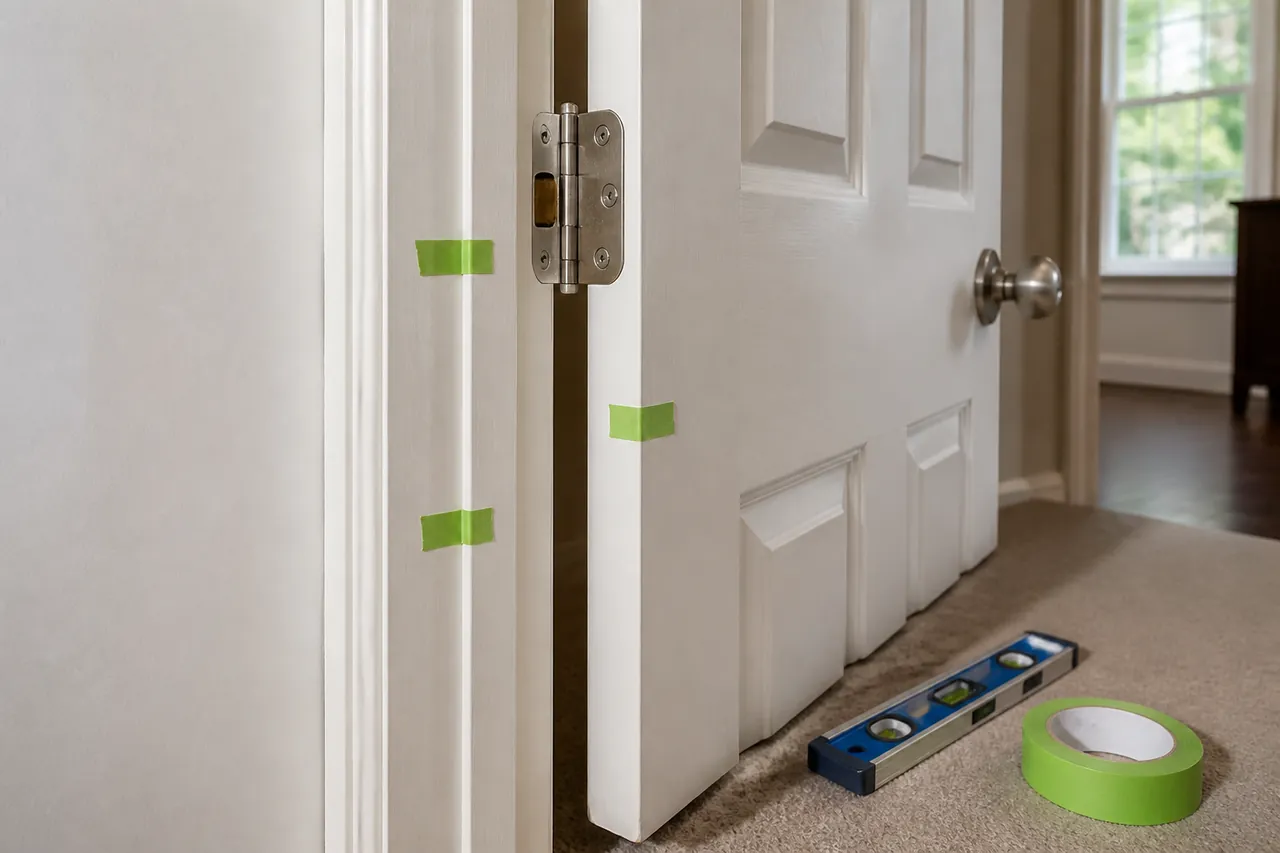
Identify the door by room and direction of travel, then describe where resistance occurs. Does it rub near the top latch corner, drag along the floor, catch at the hinge side, or resist only as the latch enters the strike? Look for polished edges, chipped paint, new marks, or uneven gaps while the door is stationary.
Photograph the full door and frame from both sides if accessible. Add closer images of the visible contact area, hinges, latch, and strike plate. Keep fingers clear of pinch points and do not repeatedly swing a heavy or unstable door to make the symptom more obvious.
Describe When the Problem Happens
Note whether the door sticks every time or only during certain weather, after long periods closed, or when heating or cooling conditions change. Mention when the problem began and whether flooring, paint, hardware, roofing, plumbing, or nearby construction changed around the same time. These details establish context; they do not prove the cause.
Explain how far the door moves before it binds and whether normal operation has become worse. Stop using the door if a loose component, cracked frame, broken glass, unsafe exterior security, or severe misalignment creates a hazard. An entry or required exit that cannot operate properly may need faster and more specialized attention than an interior convenience issue.
Review Gaps and Hardware Without Adjusting Them
From a normal viewing position, compare the gap above the door and along both sides. Record where it narrows or widens. Look for visible loose screws, pulled hinge leaves, a shifted strike, or damaged weather seal, but do not tighten, bend, shim, plane, or relocate parts as a preliminary test. Changing one point can hide the original pattern or create a new alignment problem.
If the door has a closer, automatic operator, access-control hardware, fire label, unusual weight, or specialty construction, include that information. The appropriate service ownership and adjustment rules may differ from those for an ordinary interior door.
Clarify the Desired Outcome
State whether the concern is smooth movement, reliable latching, weather sealing, privacy, security, or clearance over a finished floor. These goals can conflict if considered in isolation. For example, increasing one gap may affect sealing or latch alignment elsewhere.
Pocket, bifold, sliding, and overhead doors have different guides, tracks, and hazards. Name the door type clearly rather than applying observations from a hinged interior door to every assembly.
Ask the handyman to evaluate the complete door, frame, hinges, latch, and surrounding finish before deciding on the repair. Keep dated notes and completion photos after the work. A clear record of location, timing, gaps, hardware, and recent changes gives the provider a sound starting point while preserving evidence needed to choose the least disruptive appropriate correction.