Installing a fixture or household accessory involves more than confirming that it fits the visible space. The product, mounting surface, hidden support, connections, clearances, and intended use all influence whether the work belongs in a handyman scope. Compatibility should be reviewed before packaging is discarded, holes are drilled, or an existing item is removed.
Identify the Product Precisely
Record the manufacturer and model shown on the product or instructions. Keep the installation manual, mounting template, hardware list, and any supplied brackets together. Photograph the label and the complete contents without opening sealed parts unnecessarily. Note the product’s dimensions, stated weight, and any support or connection requirements in the documentation.
Do not rely on a product photo or general retail description. Similar-looking items can use different mounting patterns or require different clearances. If parts are missing or instructions conflict with the proposed location, resolve that question before installation begins.
Document the Mounting Area
Photograph the entire wall, ceiling, cabinet, or other surface and then the exact proposed position. Include nearby trim, doors, drawers, switches, outlets, pipes, vents, and fixtures. Measure the available width, height, depth, and operating clearance, labeling the endpoints of every dimension.
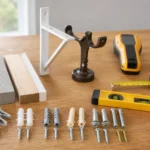
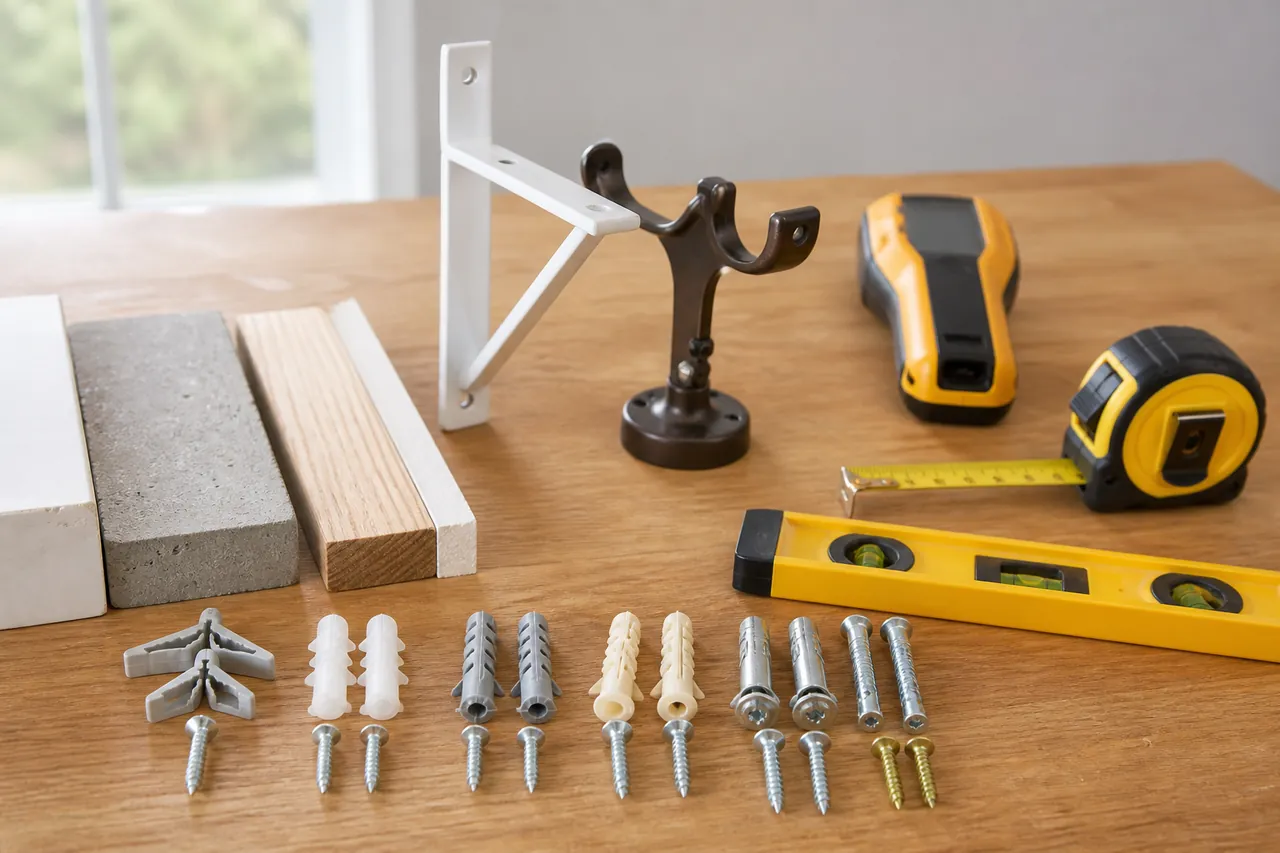
Describe the visible surface material if known, but do not assume what is concealed behind it. Drywall, plaster, tile, masonry, paneling, and cabinet components can require different preparation and fastening. A stud finder result or prior hole is not conclusive proof that suitable support exists for a new load. The installer must determine the attachment method from the actual condition and product requirements.
Review Weight, Movement, and Daily Use
Explain what the fixture will hold or how people will interact with it. A decorative object, storage shelf, grab point, folding accessory, and moving fixture impose different loads. Products intended to support a person or protect against a fall require particular care and may fall outside ordinary handyman work depending on the assembly and site conditions.
Check that doors, drawers, windows, controls, and walking paths can function after installation. Include space needed to clean, replace consumable parts, or reach shutoffs. If the product connects to electrical wiring, plumbing, gas, ventilation, or a safety system, identify that connection in the request and confirm whether an appropriately qualified specialist is required.
Agree on Scope and Handoff
Clarify who supplies the product, anchors, finish materials, and replacement parts. Discuss removal of the existing item, surface repair, drilling, sealing, cleanup, and disposal as separate scope items. Note any finish that must remain protected and any access limits around the work area. Tile layout, waterproof surfaces, cabinet faces, and finished masonry deserve explicit review before the mounting point is approved for the planned fixture, because a misplaced opening may not be easily concealed.
At completion, retain the manual, model information, unused specialty parts, and photographs of the installed fixture. Confirm normal operation only through the manufacturer’s owner-facing instructions. Compatibility questions handled early protect the product and the property while giving the service provider a clear basis for deciding whether the proposed installation is appropriate.